

2026 Subaru Forester Hybrid Vs. Honda CR-V Hybrid: AWD & Specs Compared

2026 Subaru Forester Hybrid at a Glance
- 4 trim levels with lower starting price
- Up to an EPA-estimated 35/34/35 MPG (City/Highway/Combined)1
- Standard Symmetrical AWD
- 11.6-inch touchscreen with navigation
- 8.7 inches of ground clearance
Honda CR-V Hybrid at a Glance
- 4 trim levels
- Up to an EPA-estimated 43/36/40 MPG (City/Highway/Combined)2
- Standard FWD or available AWD
- 9-inch color touchscreen
- Max 8.2 inches of ground clearance
2026 Subaru Forester Hybrid vs. 2026 Honda CR-V Hybrid
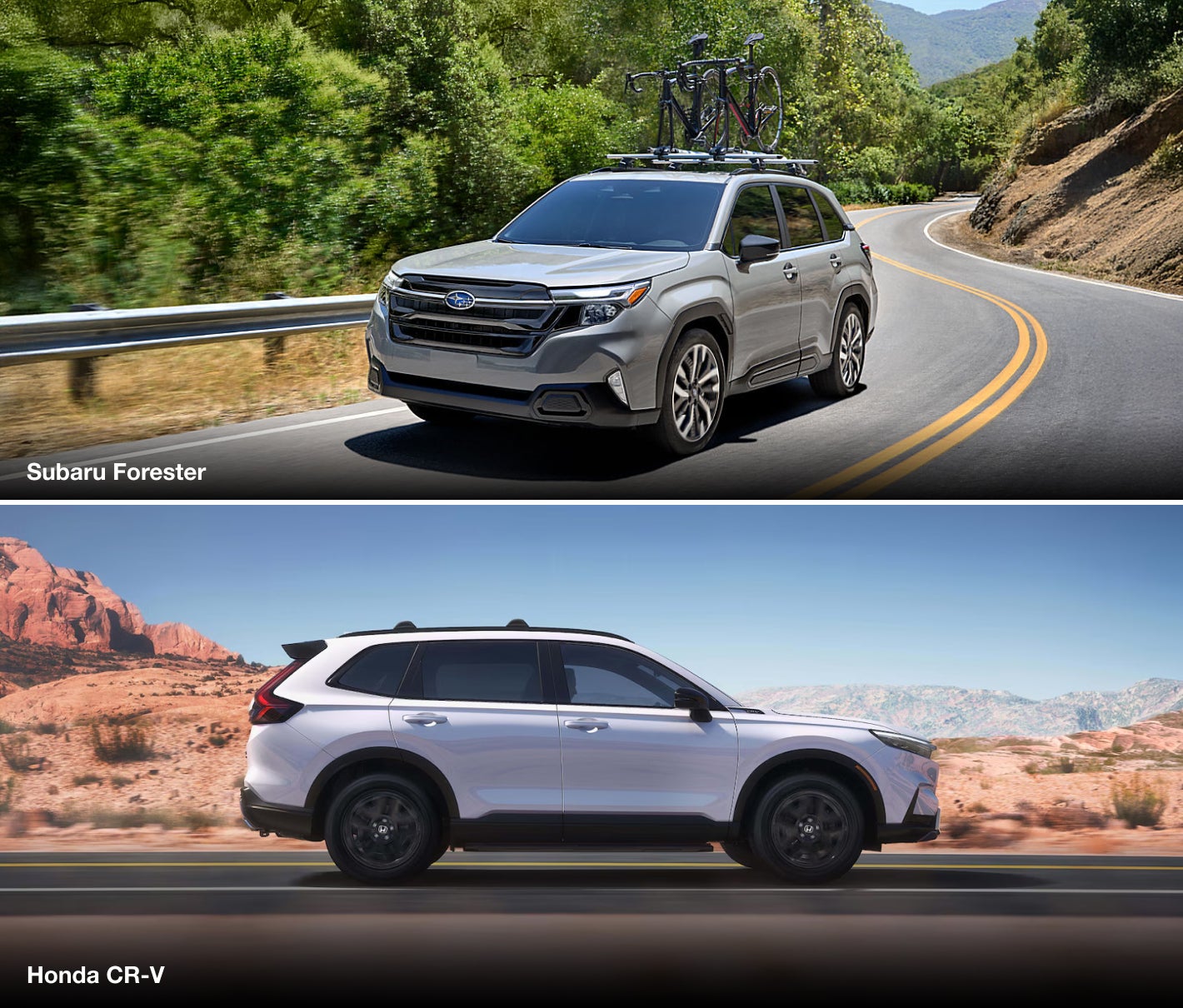
The Subaru Forester Hybrid vs. Honda CR-V Hybrid comparison is one that many shoppers will find themselves making when searching for an efficient compact SUV that's equally ready for everyday commutes and weekend exploration. However, a closer look reveals several advantages that position the Forester Hybrid ahead of the CR-V Hybrid, making it easier to embrace adventure from the very beginning – all at a lower entry price point.
Join the team at Wallace Subaru of Johnson City as we uncover the key differences between these two hybrid SUVs.
| 2026 Subaru Forester Hybrid | 2026 Honda CR-V Hybrid | |
|---|---|---|
| Trim Levels |
|
|
| Engine | 2.5L 4-cyl hybrid | 2.0L 4-cyl hybrid |
| Net Horsepower | 194 | 204 |
| Torque | 199 lb-ft | 247 lb-ft |
| Drivetrain | Symmetrical AWD | FWD / Available AWD |
| Transmission | CVT | e-CVT |
| Max EPA-Est. MPG (City / Hwy / Comb) | 35 / 34 / 351 | 43 / 36 / 402 |
| Fuel Tank Capacity | 16.6 gal | 14 gal |
| Max Towing Capacity | 1,500 lbs3 | 1,000 lbs4 |
| Ground Clearance | 8.7 in | 7.8 - 8.2 in |
| Headroom (Front / Rear) | 40 / 37.7 in | 38.2 / 38.2 in |
| Legroom (Front / Rear) | 43.3 / 39.4 in | 41.3 / 41 in |
| Passenger Volume | 106.6 cu ft | 103.5 cu ft |
| Max Cargo Volume | 69.1 cu ft | 71.8 cu ft |
Forester Hybrid vs. CR-V Hybrid: Performance & MPG
Under the hood, the Honda CR-V Hybrid is powered by a 2.0-liter four-cylinder engine paired with a dual-motor hybrid system, whereas the Subaru Forester Hybrid combines a 2.5-liter SUBARU BOXER four-cylinder engine with Toyota-sourced hybrid architecture showcasing dual electric motors.
The 2026 Subaru Forester Hybrid earns up to an EPA-estimated 35/34/35 MPG (City/Highway/Combined),1 with the 2026 Honda CR-V Hybrid achieving up to an EPA-estimated 43/36/40 MPG (City/Highway/Combined).2
Each SUV uses electrification to boost gas mileage and responsiveness, but the Forester Hybrid takes a more capability-focused approach. Its horizontally opposed BOXER engine sits lower in the chassis than a conventional inline-four, helping create a lower center of gravity for improved stability and better handling. This is paired with a Toyota-sourced hybrid system designed to work with its standard Symmetrical AWD.
While the CR-V Hybrid delivers slightly better fuel economy, the setup in the Forster Hybrid results in a hybrid powertrain that integrates with the brand's renowned engineering and balances efficiency with all-weather ability.
Plus, with a larger 16.6-gallon fuel tank on the Forester Hybrid (compared to 14 gallons in the CR-V), the Subaru can travel farther between fill-ups, even with the higher MPG rating on the Honda.
Forester Hybrid vs. CR-V Hybrid: Ground Clearance & AWD
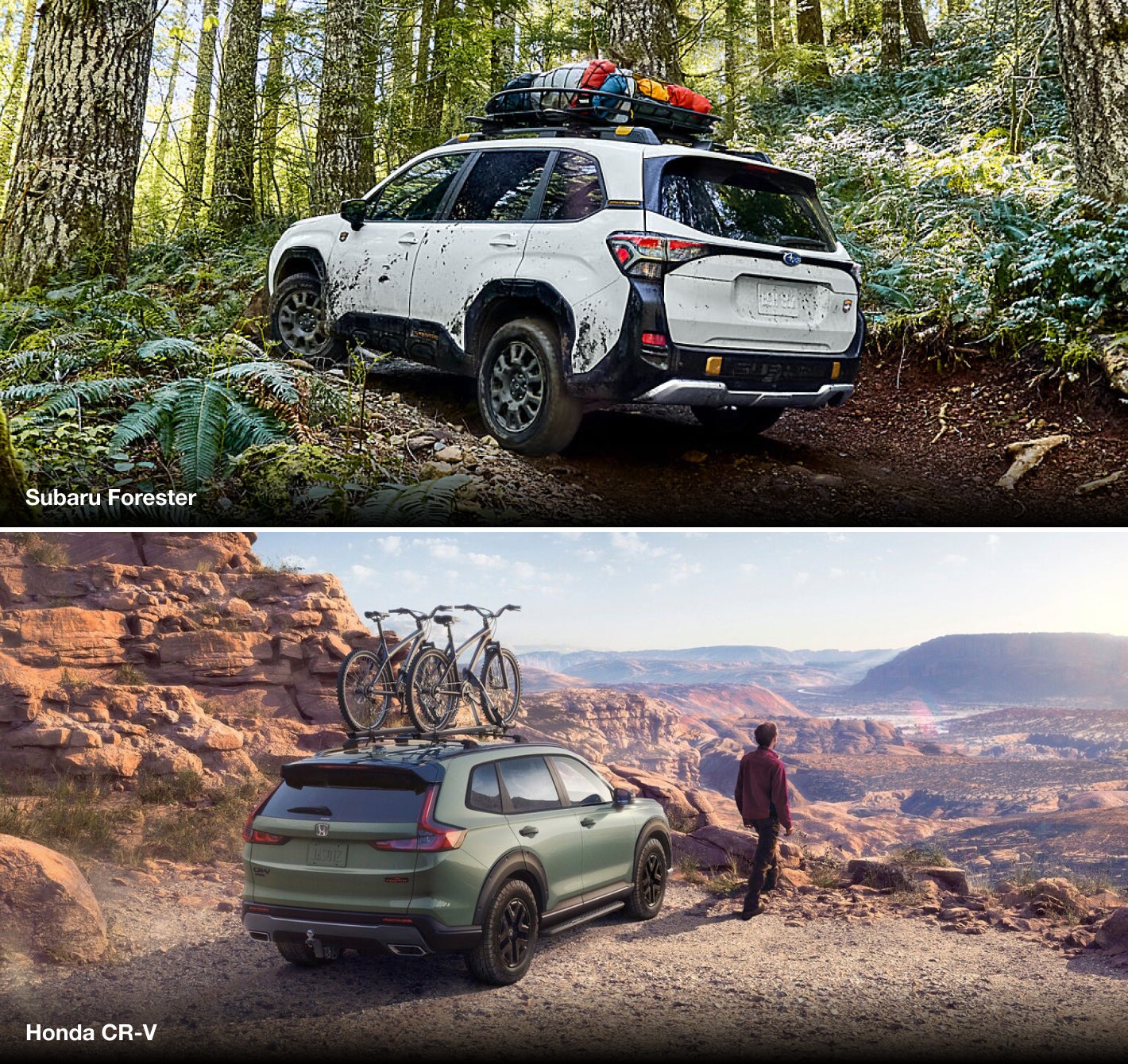
The Forester Hybrid comes fitted with standard Symmetrical AWD across all trims, joined with generous 8.7 inches of ground clearance that enables it to confidently navigate snow, gravel, and uneven roads. It's a full-time AWD system, so it continuously sends power to all four wheels and actively manages torque distribution in real time.
Meanwhile, the CR-V Hybrid provides available AWD, but it is not standard across the lineup, and even its max ground clearance of 8.2 inches falls below the Forester Hybrid. It also uses a real-time AWD system that primarily operates in front-wheel drive and engages the rear wheels only when slip is detected. This approach can support a higher MPG rating, but it is less proactive than a full-time AWD setup.
From an exterior standpoint, the CR-V Hybrid stretches longer and sits wider; in contrast, the Forester Hybrid stands taller and more upright in its design. With a shorter overall length, the Forester Hybrid benefits from a more favorable breakover angle, and its narrower footprint makes it easier to place on tight, narrow paths. Its added height also improves outward visibility, giving drivers a clearer view of both the road ahead and the terrain around them.
These Subaru Forester Hybrid specs are further elevated by a suite of dynamic systems, including X-MODE, Hill Descent Control, Vehicle Dynamics Control, Active Torque Vectoring, and Trailer Stability Assist. The CR-V Hybrid boasts its own set of components, such as Hill Descent Control, Hill Start Assist, and up to five selectable drive modes, but the Subaru SUV places a stronger emphasis on integrated traction management and stability in low-grip situations.
CR-V Hybrid vs. Forester Hybrid: Interior, Passenger Space, & Cargo
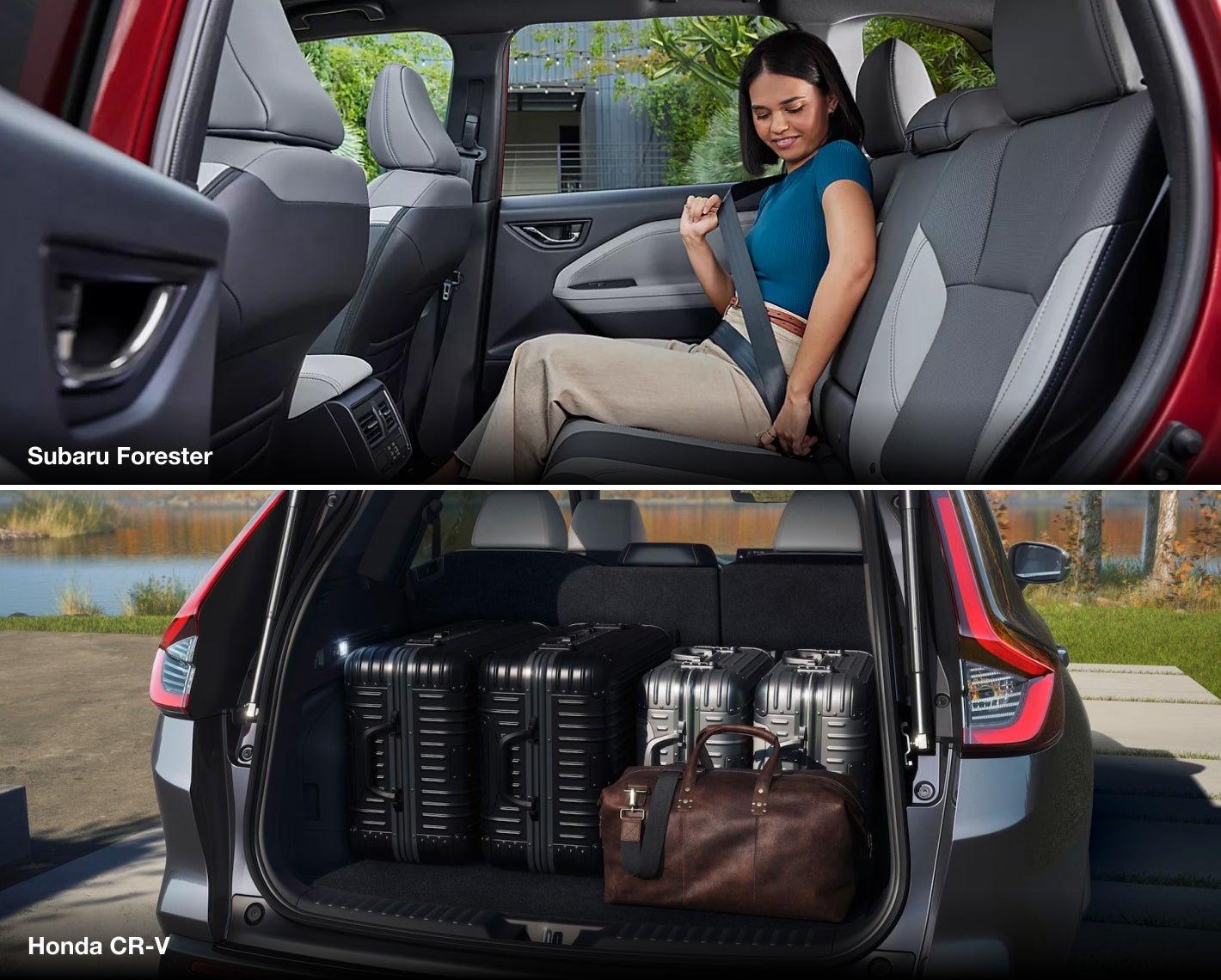
In the Subaru Forester Hybrid vs. Honda CR-V Hybrid review, both five-seater SUVs land in a similar size class, but they distribute space in different ways. The Forester Hybrid gives occupants a bit more breathing room up front, providing greater headroom and legroom for the driver and front passenger. The CR-V Hybrid shifts more of its emphasis toward rear-seat comfort with a touch more space for back-row passengers.
When it comes to total passenger volume, the Forester Hybrid edges ahead at 106.6 cubic feet compared to 103.5 cubic feet in the CR-V Hybrid, giving it a more open, airy feel overall. The CR-V Hybrid snags a win in cargo area, presenting up to 71.8 cubic feet versus the max 69.1 cubic feet in the Subaru. Still, the difference is minimal in real-world use, and both present ample room for gear, groceries, or luggage.
Comfort is a priority for each SUV, with each boasting standard dual-zone automatic climate control, heated front seats, and a 10-way power-adjustable driver's seat. The CR-V offers available leather-trimmed upholstery, but in true wilderness-focused fashion, the 2026 Subaru Forester Hybrid provides available StarTex upholstery, a water-resistant, easy-to-clean material that has a leather-like feel without the upkeep associated with traditional leather.
Forester Hybrid vs. CR-V Hybrid: Tech & Safety Systems
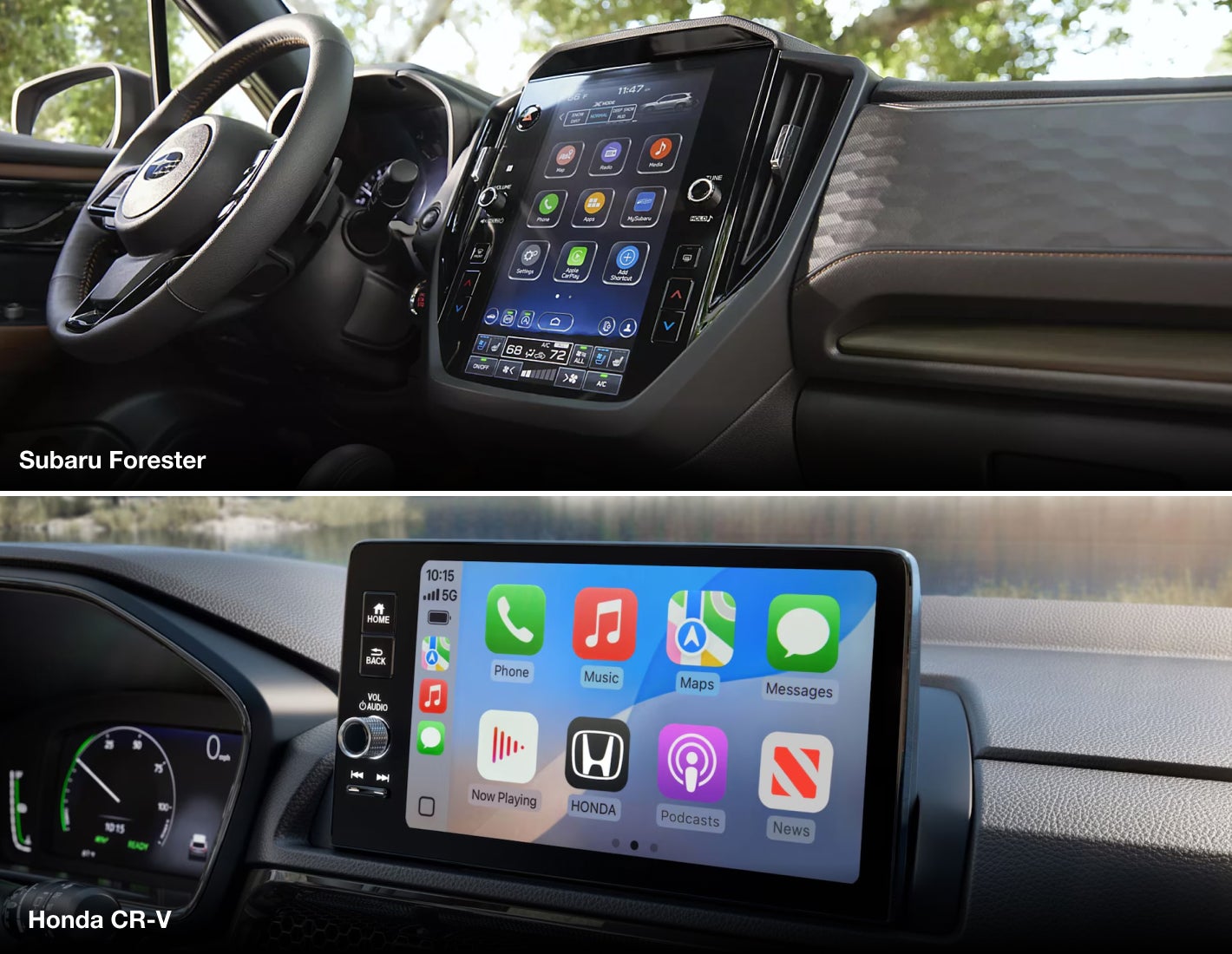
Technology plays a central role in both SUVs, but Subaru leads with a more immersive and driver-focused setup. Honda equips the CR-V Hybrid with wireless Apple CarPlay® and Android Auto™ compatibility, a 9-inch touchscreen, a six-speaker audio system, front and rear USB ports, and Bluetooth® streaming audio.
As we've seen in other areas of this Subaru Forester Hybrid vs. Honda CR-V Hybrid comparison, Subaru has more standard elements right from the start rather than requiring frequent upgrades. The Forester Hybrid comes with an expansive 11.6-inch Multimedia System with navigation and a 12.3-inch digital instrument cluster. Connectivity is further enhanced with available 4G LTE Wi-Fi, while audio is handled through a six-speaker system or an optional 11-speaker Harman Kardon® premium setup.
You'll find comprehensive safety suites in both the Honda and Subaru, with Honda Sensing on the CR-V Hybrid and the award-winning EyeSight Driver Assist Technology on the Forester Hybrid. Each system includes key features like Adaptive Cruise Control, Lane Keep Assist, and Blind-Spot Detection. However, the 2026 Forester Hybrid took home an IIHS Top Safety Pick+ award,5 an honor not given to the CR-V Hybrid.
Take the Wheel of the Subaru Forester Hybrid Today
For shoppers deciding between the two, the differences come down to priorities: all-terrain versatility and more features at the start versus slightly higher MPG and cargo space. Even in our gas-only Subaru Forester vs. Honda CR-V comparison, the Forester stands out with a more capability-oriented setup and standard amenities.
If you're ready to experience how the Forester Hybrid stands apart, schedule a test drive at Wallace Subaru of Johnson City and see it in action for yourself.
Frequently Asked Questions
How do the hybrid systems differ between the Forester Hybrid and the CR-V Hybrid?
The CR-V Hybrid uses a dual-motor system focused primarily on fuel economy, typically operating in FWD. The Forester Hybrid uses a Toyota-sourced hybrid system integrated with its standard Symmetrical AWD, supplying a stronger balance of efficiency, traction, and all-weather stability.
Which hybrid has more ground clearance, the 2026 Forester Hybrid or the 2026 CR-V Hybrid?
The 2026 Subaru Forester Hybrid offers more ground clearance than the 2026 Honda CR-V Hybrid. The Forester Hybrid boasts 8.7 inches of ground clearance across all trims, while the CR-V Hybrid tops out at 8.2 inches.
Is the 2026 Subaru Forester Hybrid all-wheel drive?
Yes, the 2026 Subaru Forester Hybrid comes standard with Symmetrical All-Wheel Drive, a full-time system that continuously delivers power to all four wheels and adjusts torque as conditions change.
1EPA fuel economy estimates. Actual mileage will vary with driving conditions and your vehicle's condition.
2Based on 2026 EPA mileage ratings. Use for comparison purposes only. Your mileage will vary depending on driving conditions, how you drive and maintain your vehicle, and other factors.
3Maximum towing capacity varies by trim level. Trailer brakes may be needed. See your retailer for details.
4Towing requires accessory towing equipment. Please see your Honda dealer for details.
5Reference to this third-party review/claim is solely for informational purposes and not to be relied upon. For more details, please visit https://media.subaru.com/pressrelease/2435/1/subaru-earns-three-2026-iihs-top-safety-pick